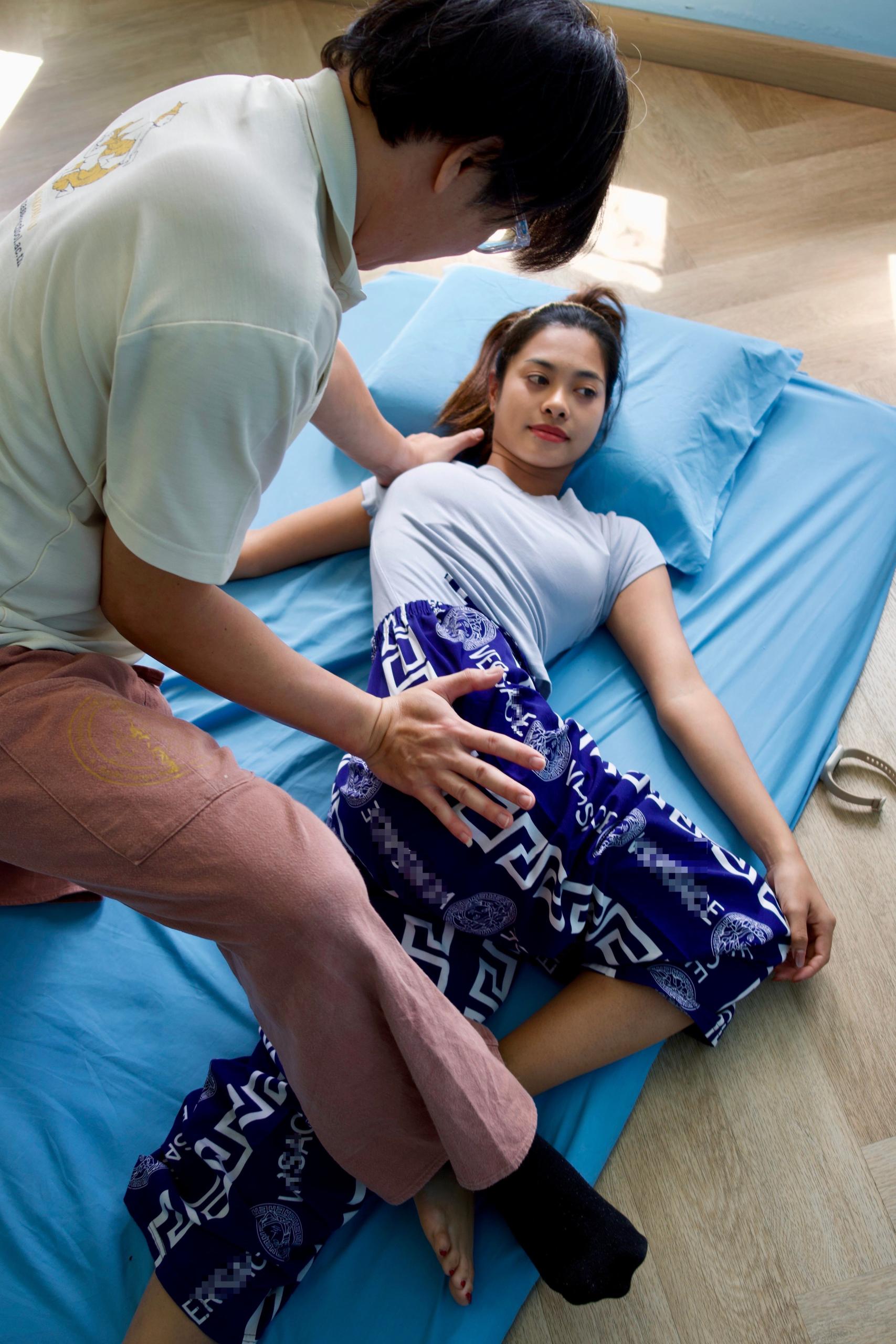
Long before “traditional Thai massage” became a fixture on spa menus around the world, it was a living medical tradition passed from healer to healer across the villages, temples, and royal courts of Thailand. Known in its own language as Nuad Boran (“ancient massage”) or Nuad Thai, it is one of the oldest documented systems of therapeutic bodywork still practised today — a discipline that blends assisted, yoga-like stretching, rhythmic compression, and acupressure into a single, flowing treatment.
A Medicine Rooted in Buddhism and Ayurveda
Thai massage’s origins are usually traced back more than 2,000 years, to the spread of Buddhism from India into Southeast Asia. Traditional accounts credit its foundation to Jivaka Kumar Bhaccha, known in Thailand as Shivago Komarpaj, a physician said to have treated the Buddha and his monks. As Buddhist teachings and Ayurvedic medical knowledge travelled with monks migrating into what is now Thailand — likely from around the second century BCE — these healing techniques were absorbed into Thai culture and gradually reshaped by local custom, herbal medicine, and folklore.
The practice took root inside Buddhist temples and monasteries, where monks and healers offered treatment to the sick and weary alongside spiritual care. Because of this, Thai massage developed as one of four traditional branches of Thai medicine — alongside herbal treatment, nutrition, and spiritual practice — rather than as a stand-alone therapy.
Energy Lines, Elements, and Everyday Healing
Traditional Thai massage is built on a theoretical framework distinct from Western anatomy. Practitioners work along invisible energy pathways known as sen lines, applying pressure and stretch to encourage the body’s four elements — earth, water, wind, and fire — back into balance. Outside the temples, the practice also grew as ordinary self-care: historical accounts describe villages where farmers, tired and sore from working the fields, turned to local massage healers for relief, long before it was formalised into a licensed profession.
A History Nearly Lost
Much of Thailand’s early written record of massage was destroyed when the Burmese army sacked the capital of Ayutthaya in 1767. What survives today owes a great deal to King Rama III, who in the 1830s ordered healing texts and anatomical diagrams inscribed on stone tablets and murals at Wat Pho, the Temple of the Reclining Buddha in Bangkok — inscriptions that remain a place of pilgrimage for massage students today. Practitioners still open a session with the waikru, a short ritual of prayers and recitations honouring Shivago Komarpaj and the tradition’s origins — a quiet acknowledgement of how far the practice has travelled.
Two Schools, One Tradition
Over time, two distinct regional styles emerged. The Northern, or Chiang Mai, style is generally slower and gentler, with long, rhythmic strokes. The Southern, or Bangkok (Wat Pho), style is faster-paced and more vigorous, with deeper pressure and more assisted stretching. Both are still taught and practised throughout Thailand and, increasingly, in spas and wellness centres worldwide.
Recognised as World Heritage
In 1985, Thailand launched the Project for the Revitalisation of Thai Massage to formally document and preserve the practice as youth interest in traditional healing arts declined. That effort culminated in December 2019, when UNESCO inscribed Nuad Thai on its Representative List of the Intangible Cultural Heritage of Humanity — official recognition of a healing art that had, for two millennia, been carried forward hand to hand, village to village, and temple to temple.
At Rak Thai, traditional Thai massage remains the heart of what we do — an unbroken thread connecting our therapists, trained in these authentic techniques, to a tradition more than two thousand years in the making.